Share the voices and stories of current SIAT students to garner more interest in the program and illustrate the kinds of work students are doing to provide a better understanding of what SIAT is.
OBJECTIVE
Getting to know our students through conversations.
Our process began by interviewing 12 randomly selected first and second year SIAT students to understand their experiences entering the program: how they discovered it, what they wish they knew beforehand, and what the process looked like.
Our main takeaways from the interviews: students wished they could hear from a current SIAT student to understand the program from the point of view of somebody actually in it, not from the university itself
THE PROCESS
As content designer and writer, I interviewed students, translating their words into compelling short articles, and generated content to showcase authentic student stories from Simon Fraser University's School of Interactive Arts and Technology (SIAT).
Content Design
Writing
Research
Jayden Zhang
Keyaan Vegdani
Sandra Cao
Stories from the Studio
ROLE
TEAM
Jun 2025 - Aug 2025
10 weeks
DURATION
Upon dissecting initial interviews with SIAT students, it was found that they are united by one problem: They can't describe their university program to friends and family. We get it, SIAT is confusing to explain. And with enrolment at an all-time low, we wanted to see what we could do to get the word out.
What is SIAT? How can we garner more interest from potential students?
THE PROBLEM
An interactive website showcasing real, unfiltered student stories from diverse perspectives.
THE SOLUTION
Capturing authenticity through interviews.
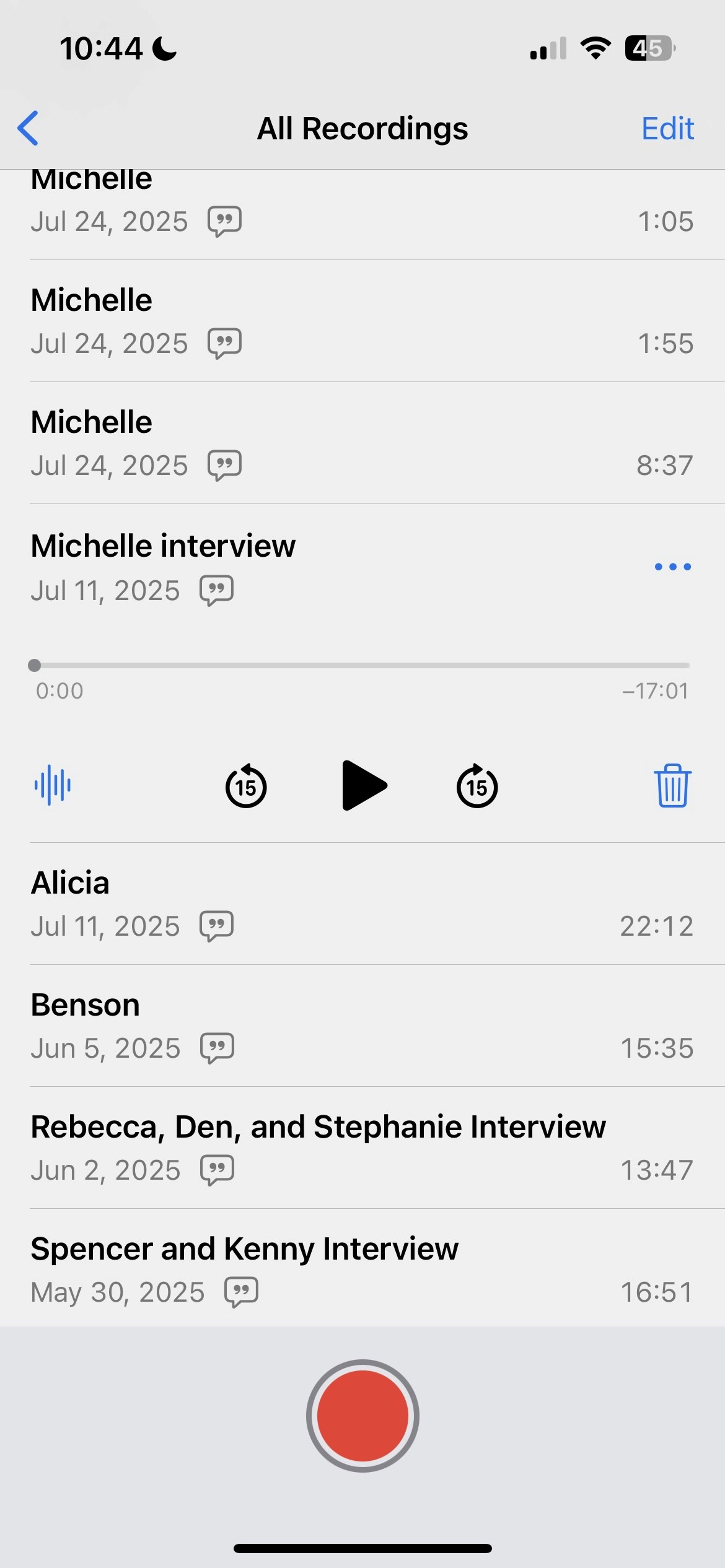
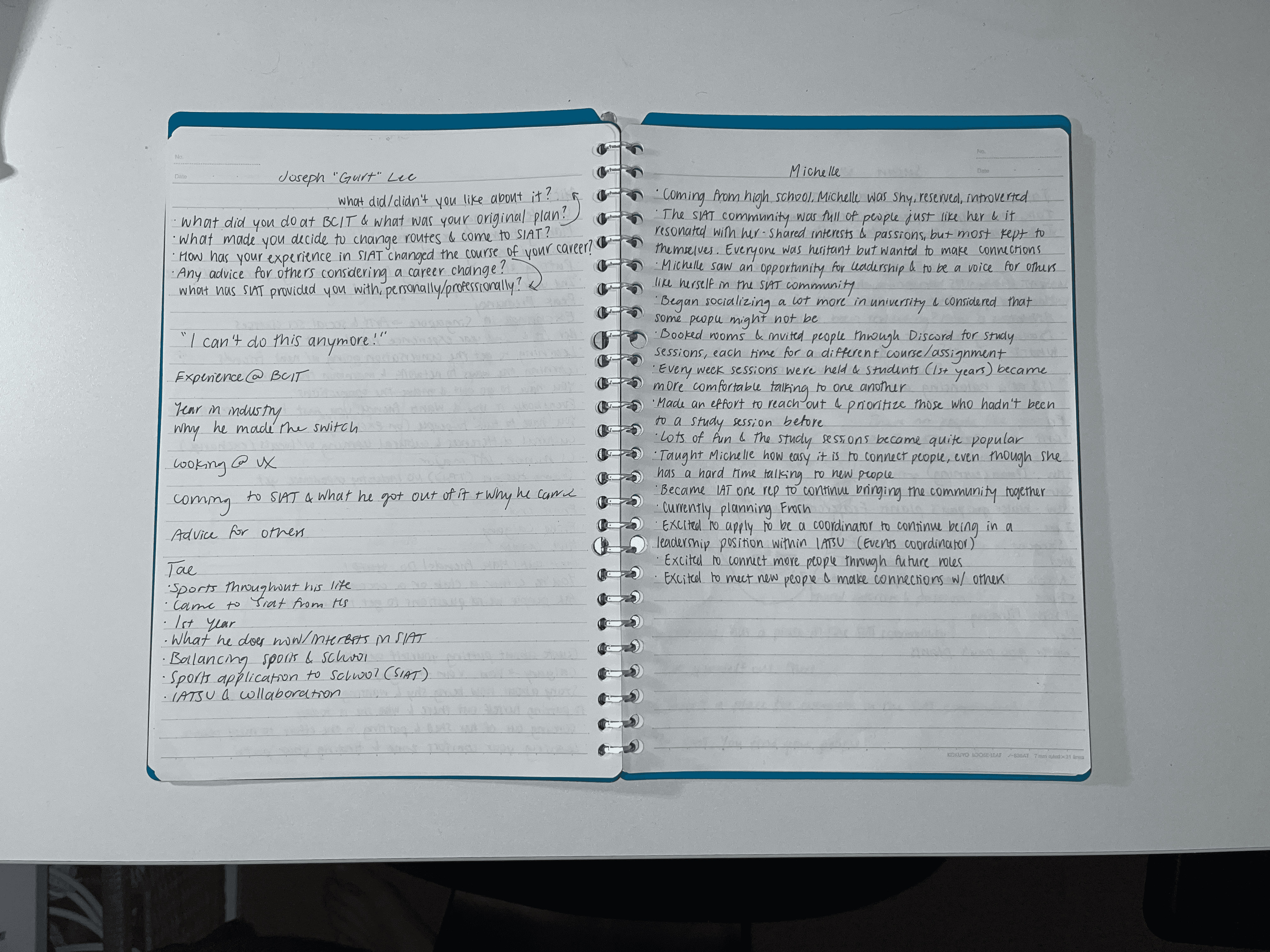
We then selected four SIAT students from different years of study who experienced unique pathways into the program: Joseph, Michelle, Fernando, and Tae. I conducted in depth, conversational interviews in which each student told the story of how they discovered SIAT and their experiences in the program.
Striving for authenticity, I spent the first half of the interview session getting to know each student to connect with them and create a comfortable atmosphere. I then asked students to lead their own interviews: instead of a typical interview format, each student was given a series of prompts and shared their story freely; anecdotes were encouraged.
How do I maintain students' voices while translating stories from verbal to written?
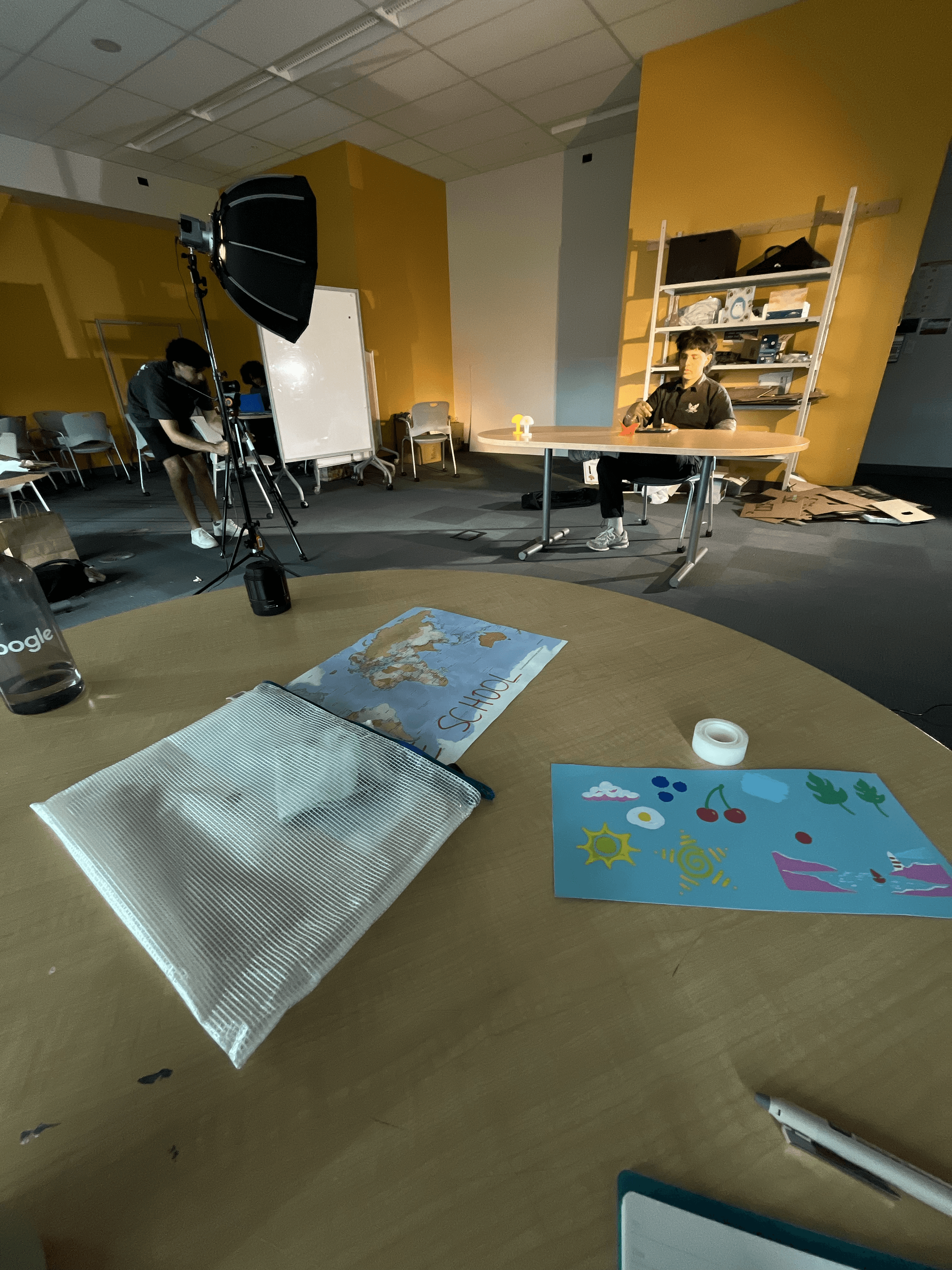
My biggest challenge as content designer was writing accurate stories that conveyed each student's personality, voice, and intent. Aside from my long conversations, my team and I spent countless hours with each student while producing their short introduction videos. Here, I learned more about each student's personality, interests, and sense of humour.
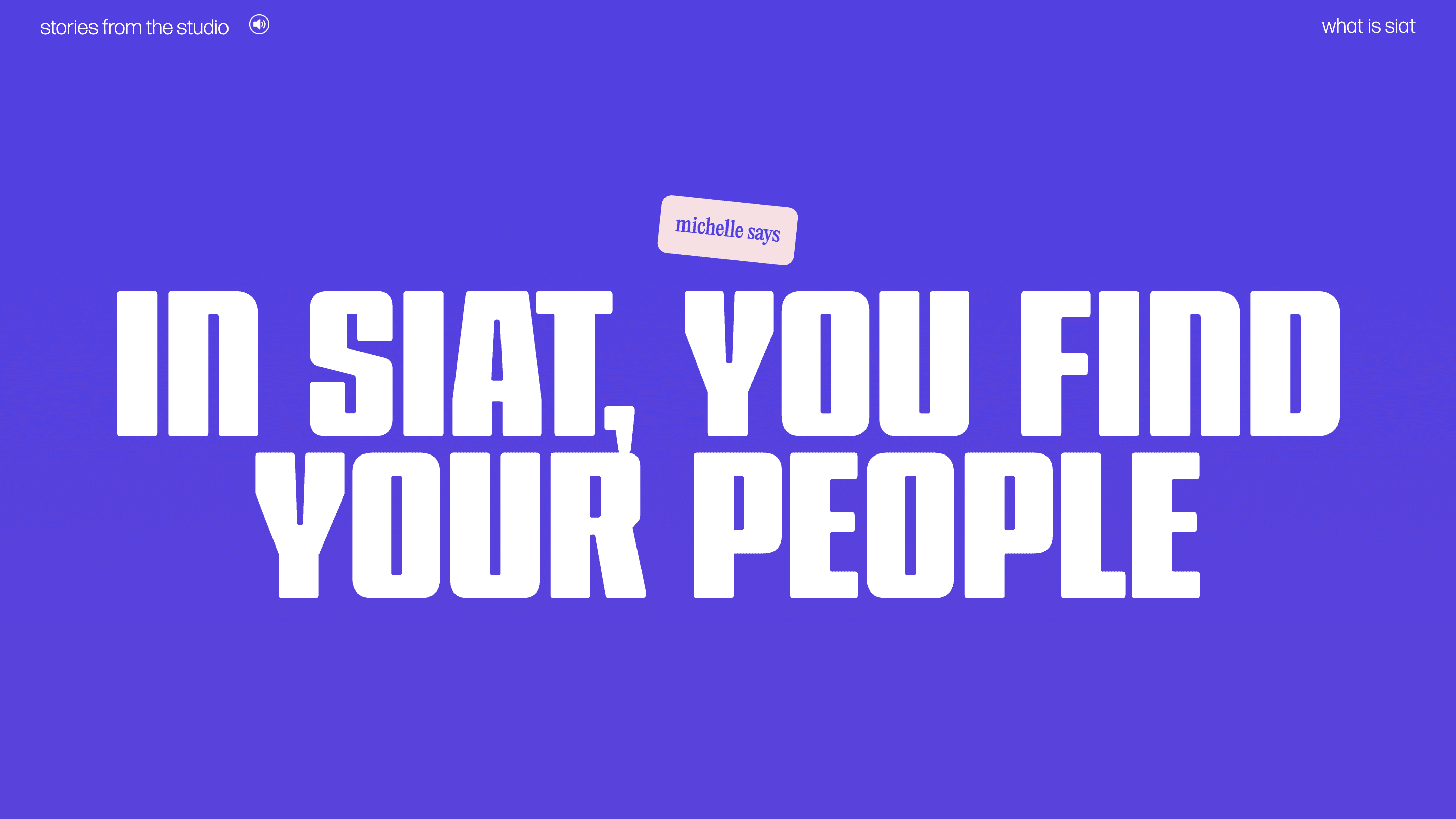
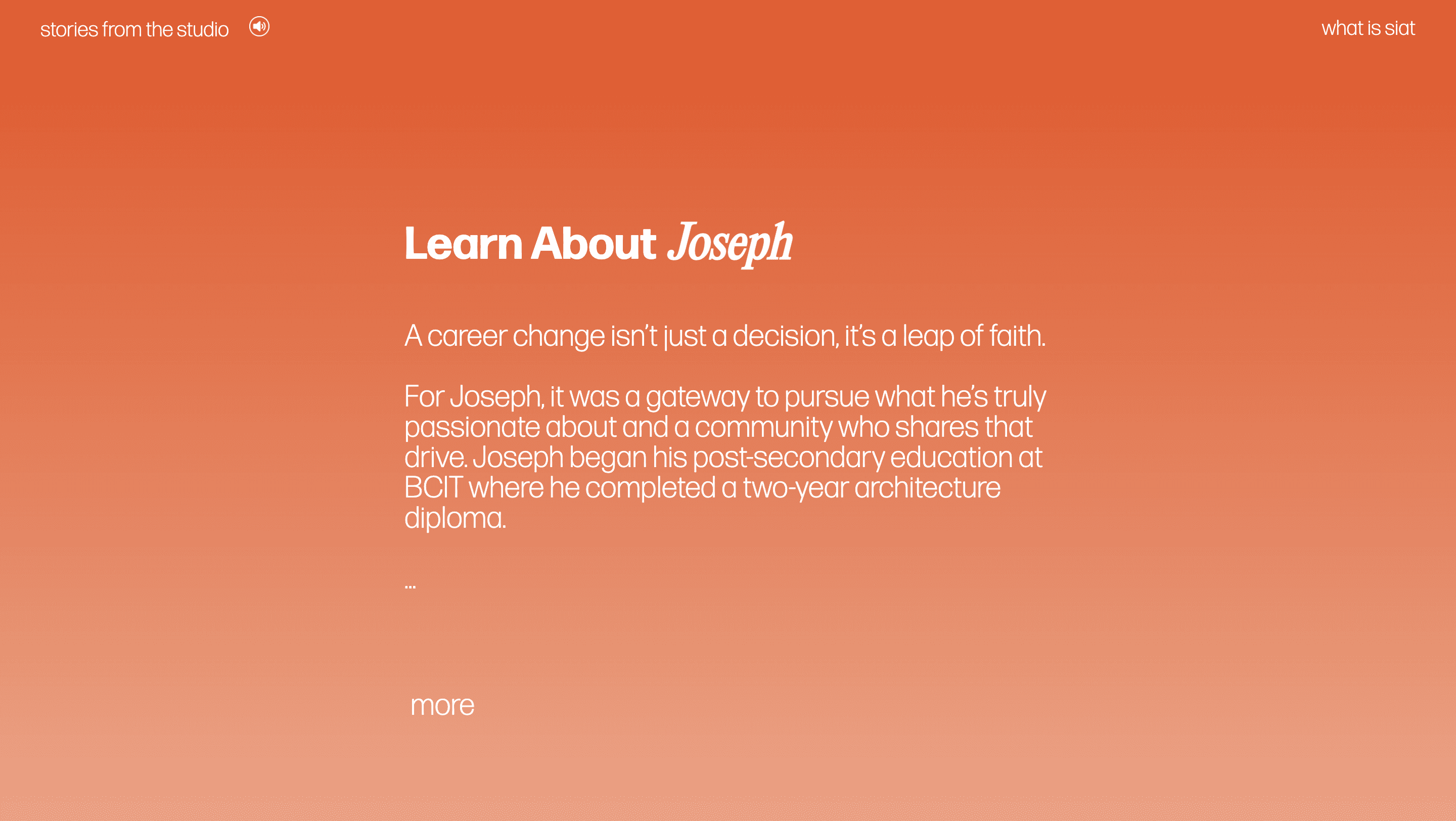
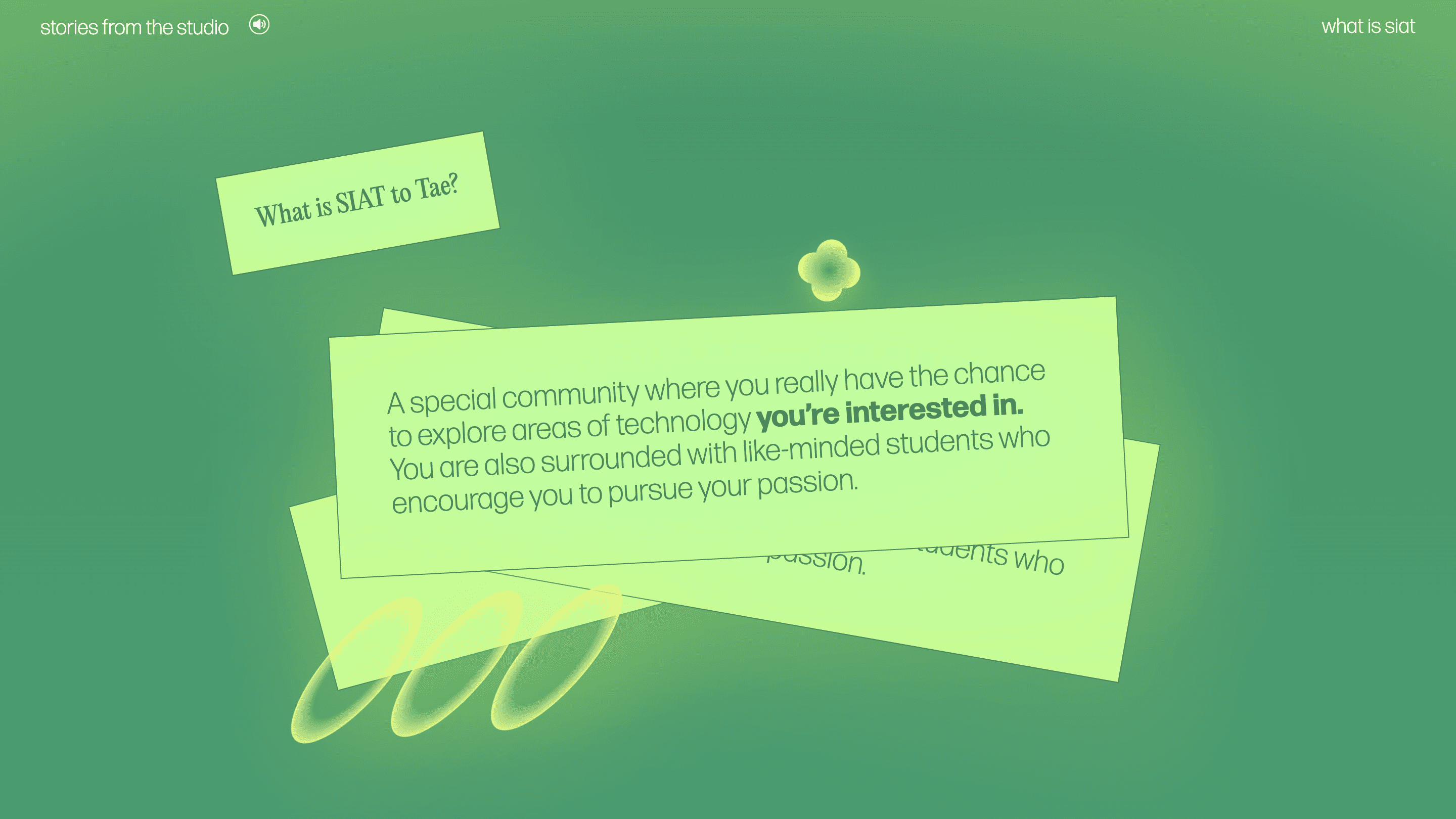
Each student feature on Stories from the Studio includes direct quotes to convey their voices and a short article to tell their stories.
Know your subject and know your purpose.
Getting to to know who you're writing about and what you're writing for are integral to sending a message that sticks. Our preliminary interviews with SIAT students, extensive conversations with Joseph, Michelle, Tae, and Fernando, and spending long days with them during video production were integral to telling stories as authentically as possible.
TAKEAWAYS